Why the Phone Stand Market Got Interesting Again When MagSafe Showed Up
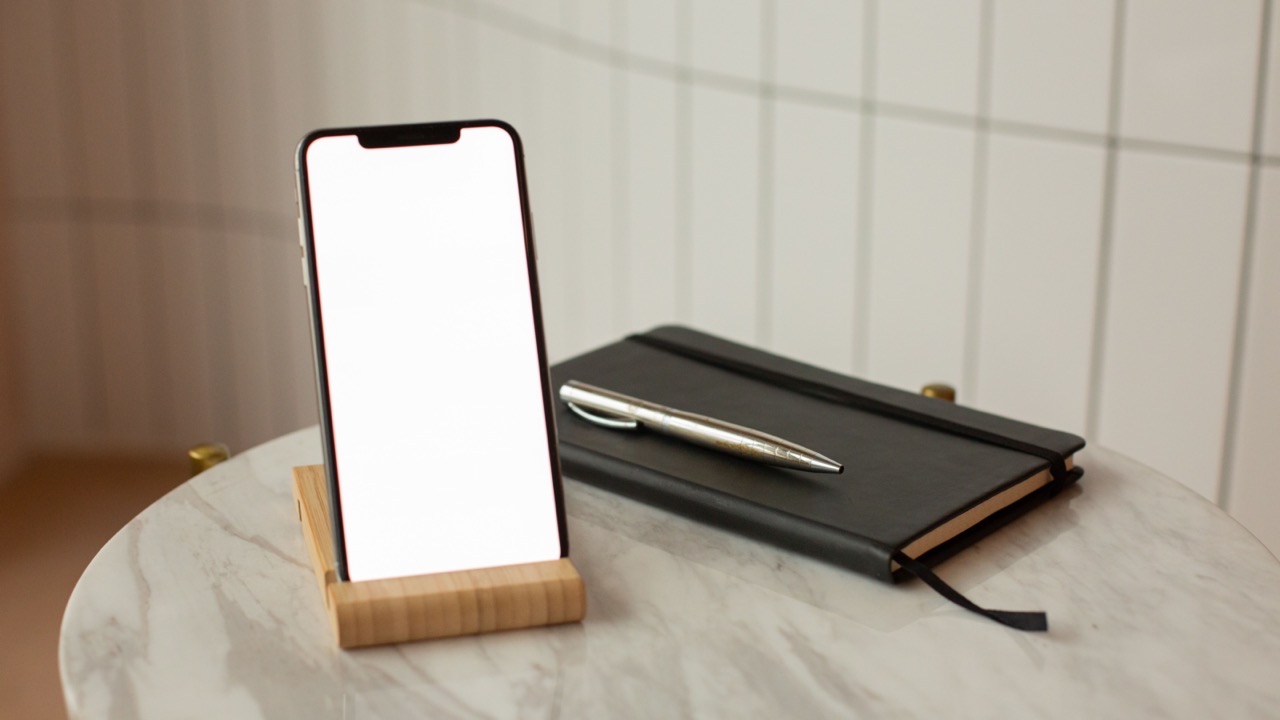
Phone stands have existed for as long as smartphones have. The basic form — some kind of holder that props a phone upright on a surface — is a solved design problem with a commodity market. Plastic cradles, adhesive holders, folding kickstands, suction cup mounts. The category had converged on a stable state: functional, inexpensive, unremarkable.
MagSafe changed the design problem. Not the idea of a stand, but the constraint that had always made phone stands slightly annoying to actually use — the placement requirement. Every stand before MagSafe required the phone to be positioned accurately enough that it held. Slots needed to be aimed for. Cradles required two-handed placement to avoid tipping. The friction of returning the phone to the stand was small per instance but added up to something you either got used to ignoring or eventually stopped bothering with.
Magnetic alignment removed that constraint. The result wasn’t just an incremental improvement on existing designs — it made a different product category viable.
What the placement problem actually costs
The value of a phone stand comes from the habit it creates. A stand that the phone reliably returns to — after a call, after checking a notification, after handing it to someone — becomes the phone’s home on the desk. The phone is always in the same place, always at the same angle, always easy to grab.
A stand where returning the phone requires any deliberate action — aiming, adjusting, checking that it seated correctly — creates a small friction at exactly the moment when friction costs the most: when you’re in the middle of something else and you’re setting the phone down without looking at it. Under those conditions, the phone ends up somewhere near the stand rather than in it, and the stand stops functioning as a home and starts functioning as a suggestion.
The actual usage pattern that results from high-friction placement is that the phone is in the stand when you consciously put it there, and somewhere else on the desk the rest of the time. Which means the stand doesn’t solve the phone-as-desktop-object problem; it just gives you a place to put the phone when you’re tidying up.
What magnetic alignment changes about the interaction
MagSafe puts the alignment into the magnets rather than into the user’s attention. The magnetic ring in the phone finds the corresponding ring in the stand regardless of the approach angle, and snaps into position before you’ve finished the motion of setting it down. One-handed, without looking, while doing something else — the phone goes where it should.
This is a small change in the physical action and a large change in the behavior it produces. When placement is automatic, the stand actually becomes the phone’s home rather than an optional destination. The phone returns to the stand after every use rather than only when you’re paying attention to where you’re putting it.
The behavior shift from “phone somewhere on the desk” to “phone always in the same place” compounds through a workday in ways that are hard to predict before you’ve experienced the difference. The cognitive load of tracking where you left the phone disappears. The battery anxiety that comes from not knowing how long the phone has been off the charger disappears, because wireless charging happens continuously whenever the phone is in the stand. The friction of the phone-desk interaction goes to approximately zero.
The charging integration as a design feature rather than a bonus
Early MagSafe stands emphasized wireless charging as a key selling point, which is accurate but undersells the more significant feature. The charging isn’t the point; it’s a consequence of the magnetic alignment that’s already there for positioning purposes. The MagSafe system was designed with charging as the primary function and mounting as a secondary application, which means the charging performance is real — not the low-efficiency wireless charging of earlier Qi pads, but a faster, more reliable connection that maintains itself automatically throughout the session.
The practical effect is that a phone in a MagSafe stand never gets low from sitting idle. The charging happens in the background, without any management, during the hours the phone is between uses. This changes the planning assumptions around battery in a way that’s easy to underestimate: you stop thinking about when to charge and start using the phone with confidence that it’s going to have power when you need it.
Why the form factor matters
A charging pad on a desk requires horizontal surface area and positions the phone face-up, which requires picking it up to see the screen. A peakzooc magsafe phone stand positions the phone vertically, at approximately eye level, in a viewing angle that makes the screen readable without picking the phone up. Notifications are visible from the seated position. Video calls have the camera at a reasonable height. The phone occupies a smaller desk footprint and uses vertical space that the rest of the desk doesn’t need.
The vertical orientation is the feature that makes the stand useful as a productivity tool rather than just a charging surface. A phone at eye level, visible from your normal working position, connected to charging automatically, and easy to grab and return with one hand — this is a meaningfully different experience from a phone lying flat or propped against something.
What makes the market interesting now
The phone stand category before MagSafe had basically converged. There wasn’t much to differentiate beyond price and aesthetic — the design problem was solved and the solutions were commoditized. MagSafe reopened the design space by changing the fundamental constraint.
The interesting design questions for MagSafe stands are about positioning, stability, build quality, and how well the magnetic connection is implemented — whether the field strength is right for secure hold without excessive snap, whether the alignment ring is precisely centered, whether the charging efficiency is optimized. These are real engineering considerations that produce real differences between products, which is what makes a commodity category non-commodity again.
The result is a market where the product quality actually matters in ways that were harder to differentiate before the magnetic interface existed. Stands that implement it well produce a noticeably better experience than those that implement it poorly, and the difference is apparent in daily use rather than only on a specification sheet.